Find Triple Ball: Match Triple
BRAINWORKS PUBLISHING PTE. LTD.Board
4.6113.00 Reviews
- Version
- 2.0.1
- Installs
- 50.00K
- Age Rating
- Everyone
Screenshots
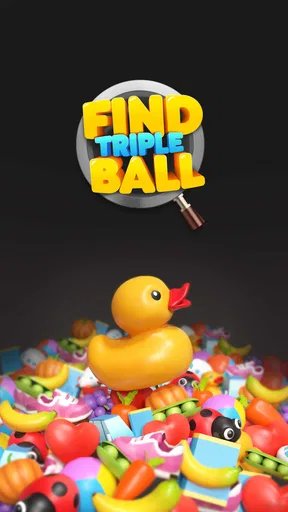
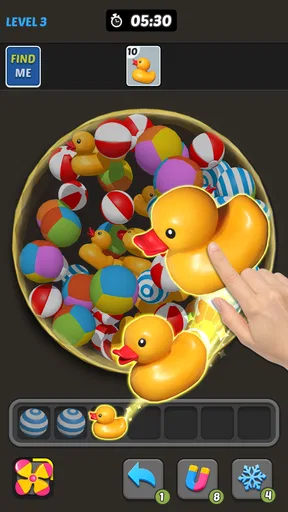
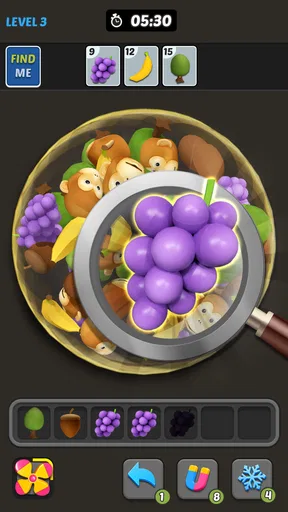
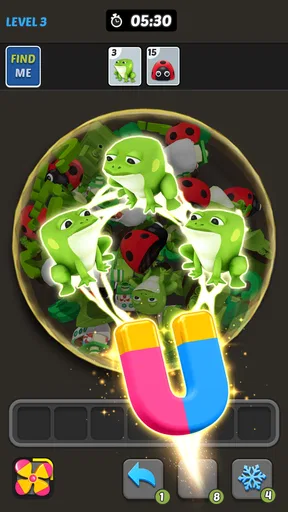

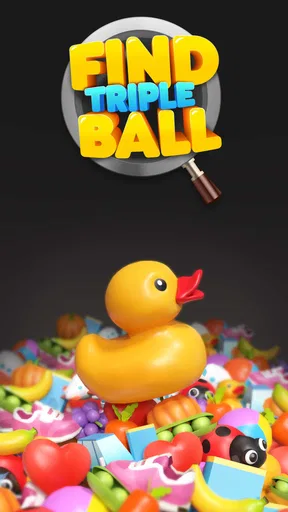
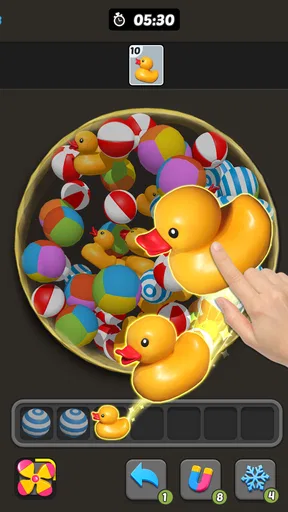
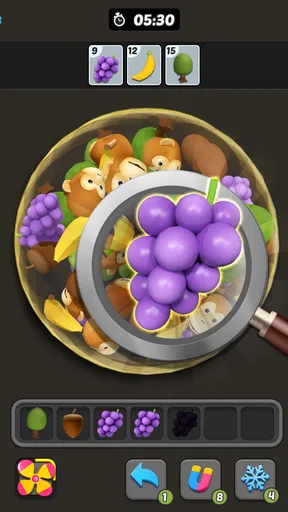
Our Review of Find Triple Ball: Match Triple
 Analysis by Appyee
I spent time with Find Triple Ball: Match Triple as a light board game built around spotting and matching hidden three-dimensional objects. Its appeal is easy to understand: the screen gives me a small visual puzzle, I look for three matching items, and I try to keep my attention steady while the board becomes more demanding. It is the kind of game I can open without preparing for a long session, yet it still gives me something to focus on instead of asking me to react at arcade speed.
The game is free to download and is suitable for Everyone, which makes it approachable for casual players and families. BRAINWORKS PUBLISHING PTE. LTD. is the developer, and the game has reached over 50 thousand installs. Its average rating is 4.6 from around 578 ratings, with about 113 written reviews, so there is a useful sign that the basic idea has connected with a noticeable group of players. I would describe it as a relaxed matching game first and a traditional board game second.
How the matching feels in everyday play
The central challenge is visual rather than strategic in the way a classic board game might be. I am not building a long-term plan across a table or managing a complicated set of rules. Instead, I am scanning the arrangement, identifying a trio, and making a choice before the available space or visual clutter makes that choice harder. That difference matters: people who enjoy observation puzzles will probably settle into it quickly, while players looking for deep tactics may find the structure intentionally simple.
What I like about this format is the low barrier to entry. I do not need to remember a tutorial full of special cases before I can begin. The objective is clear enough to understand from the first few attempts, and the three-dimensional presentation gives the search a more tactile feeling than a flat grid of identical icons. The objects are not merely numbers or colored squares; I have to recognize shapes and appearances, which makes attention more important than rapid tapping.
My preferred way to use it is in short gaps during the day. If I have a few minutes before leaving home, while waiting for an appointment, or after finishing a task, the game gives me a contained activity with a clear purpose. I do not have to commit to a long story, coordinate with other players, or learn a character system. That makes it a better fit for casual decompression than for someone who wants a large progression system.
The relaxed presentation also changes how I judge mistakes. In a fast action title, a missed input can feel like a reflex failure. Here, a poor choice usually comes from rushing my visual search or overlooking an object hidden among similar items. I get better results when I slow down, inspect the whole board, and avoid selecting the first plausible match. That is a small but useful habit: the game rewards organized scanning more than frantic tapping.
Where it feels quick and where it asks for patience
Perceived speed depends less on reflexes than on how quickly I can read the arrangement. The opening moments of a session feel accessible because the goal is immediately recognizable. As the board becomes visually busier, the game naturally takes more attention. I would not call that sluggishness; it is the intended pressure of a hidden-object matching task. The game feels fastest when I already know what I am searching for and slowest when several objects compete for my attention.
A practical technique is to divide the screen into sections instead of sweeping randomly from one object to another. I check one area, remember possible matches, and then move across the next. This reduces repeated searching and helps me avoid selecting a tempting pair before finding the third item. It is especially useful when I am playing in a noisy environment, because the method gives my eyes a simple route to follow.
I also found that the game works better when I treat each move as a small decision rather than a race. The visual design encourages me to look for a complete trio, but impatience can turn an easy board into unnecessary confusion. Players who enjoy calm concentration will appreciate this rhythm. Those who expect constant action may interpret the same rhythm as too slow, particularly during a longer session.
There is another trade-off in the three-dimensional style. Depth and overlapping objects can make the search more interesting, but they can also make recognition less immediate than it would be in a clean two-dimensional matching game. That is part of the identity of this title, not a flaw by itself. Still, anyone with limited patience for visual clutter should try a short session before deciding whether the presentation feels satisfying or tiring.
What happens during longer or heavier sessions
For a brief play period, the game’s simple premise is its main strength. During heavier use, the question becomes whether the visual task remains enjoyable after the novelty of finding the first few triples has faded. In my view, it remains most effective as a repeatable short-session game. The activity is easy to resume, but it does not replace a full strategy board game, a competitive multiplayer match, or a puzzle adventure with a substantial narrative.
That distinction is important for expectations. If I want something to occupy ten quiet minutes, the focused matching loop makes sense. If I want an evening-long experience with changing systems and a strong sense of discovery, I would look elsewhere. Find Triple Ball: Match Triple is built around repeated observation, so its value comes from the quality of that small loop rather than from a wide collection of unrelated mechanics.
When I use it repeatedly, I pay attention to mental fatigue rather than device strain. Searching for similar objects is comfortable at first, but extended concentration can become tiring, especially if I am already working at a screen all day. I get more enjoyment by stopping after a natural break instead of forcing myself to continue. That is a useful use case for the game: it can provide a mindful pause, but it is not automatically restful for every player simply because the rules are gentle.
It also suits different levels of attention. A child or a casual adult can approach it as a straightforward matching activity, while a more methodical player can turn the search into a personal exercise in speed and accuracy. Since the age rating is Everyone, it is positioned as broadly accessible. Even so, accessibility of rules is not the same as universal comfort: small visual details, busy arrangements, or extended screen focus may still matter to individual players.
Stability, recovery, and the practical side of playing
My overall impression is that the game is easy to return to because its purpose is uncomplicated. I do not need to reconstruct a complex story or remember a large set of controls after stepping away. That makes recovery from an interrupted session less mentally demanding than in many larger games. If a notification or everyday task pulls me away, I can generally come back with the same basic scanning approach.
I would still recommend treating any mobile game as something that can be interrupted by the phone itself. A call, a system message, or a change of app can break concentration, and a visual puzzle is particularly sensitive to losing track of what I was examining. The best recovery habit is simply to pause mentally and rescan the board instead of assuming I remember every possible match. That may cost a moment, but it is safer than making a hurried selection based on an outdated view.
The current version is 2.0.1, and the game was released on March 9, 2023. Those details place it in the category of an established mobile title rather than a brand-new experiment. I see the version information as useful when checking compatibility, but I would not treat a version number alone as a promise of a particular experience on every phone. Performance can still vary with the device, operating system, available storage, and whatever else is running in the background.
The minimum operating system is Android 8.0. That is a helpful boundary for owners of older phones: if the device is below that requirement, this is not the right download to plan around. For compatible phones, the game’s focused design suggests a more modest demand than a large three-dimensional action game, but I would still leave some free storage and close unusually demanding apps if the device is already struggling. Those are sensible precautions, not claims about a specific memory requirement.
Device limits and resource expectations
Because this is a board-style matching game rather than a large open-world title, I would choose it when I want a visually engaging experience without committing my phone to an elaborate game session. The three-dimensional objects give it more visual character than a plain tile matcher, yet the task remains contained. On a recent or reasonably maintained phone, that balance should be appealing to players who want something lighter than a demanding action game.
Older compatible devices deserve a more careful expectation. The Android requirement allows a broad range of phones, but an operating-system match does not guarantee identical smoothness on every model. If a phone has limited free space, many background apps, or a battery already under pressure, any game can feel less comfortable to use. I would test it during a short session first, paying attention to touch response, visual clarity, and whether the device becomes noticeably warm.
Battery use is also a matter of context. A short matching session is a different workload from leaving the screen active for a long period. I would avoid judging the game after a single demanding day that also included streaming, navigation, and other heavy tasks. Conversely, players who need maximum battery conservation may prefer a simpler offline pastime or a non-screen activity. The right question is not whether it uses no resources, but whether its visual puzzle is worth the screen time for that particular moment.
Screen size affects the experience more than I first expected. On a larger display, separating nearby objects and examining the arrangement feels more comfortable. On a compact phone, the same three-dimensional clutter may require more careful attention and more precise touches. If I were choosing between devices, I would favor the one with the clearer, larger screen rather than the most powerful processor, because recognition and comfortable tapping are central to this game.
Free access and the question of spending
The game is free, which makes trying the core experience straightforward. It also includes in-app purchases ranging from $0.99 to $99.99 per item. That wide range is something I would keep in mind before handing the phone to a child or allowing casual purchasing. The free entry point is useful, but I would review the device’s purchase controls so an accidental tap does not turn a short experiment into an unwanted charge.
I do not think spending is necessary to decide whether the matching loop suits me. I would first play without buying anything and judge the visual search, pacing, and comfort on my device. If I enjoy the game enough to consider an optional purchase, I would make that decision based on a clear benefit rather than on frustration from a difficult board. This is especially relevant for a game whose main attraction is the satisfaction of finding objects, not the ownership of a large collection.
Compared with ordinary matching games, this title’s main distinction is the hidden three-dimensional presentation. A conventional tile matcher may be easier to read and may feel more predictable, while this game adds depth and visual searching. Compared with classic board games, it is faster to start and requires less planning, but it does not offer the same social interaction or strategic variety. Compared with hidden-object games, the triple-matching rule gives each search a more definite finish: I am not merely inspecting a scene; I am trying to complete a set.
Who should install it, and who should skip it
I would recommend it to someone who enjoys visual sorting, relaxed puzzle sessions, and games that can be understood quickly. It is particularly suitable for a person who likes the feeling of tidying a messy visual space into clear groups. It can also work for a family member who wants an accessible board-style game without a complicated ruleset, provided the screen size and visual density are comfortable.
I would be less enthusiastic about it for players who need a strong competitive layer, online social play, dramatic progression, or a deep tactical system. Someone who prefers word puzzles may also find the object recognition less satisfying than language-based challenges. And if visual clutter is tiring, a flat matching game with larger, simpler symbols may be a better choice. The three-dimensional look is the reason to choose this game, but it is also the feature most likely to divide opinion.
My most useful tip is to play with a deliberate search pattern and to stop treating every possible pair as urgent. Look for the full trio, keep the screen organized in your mind, and rescan after any interruption. On a smaller phone, increasing general display readability may help more than searching for a faster device. For younger players, I would also set purchase protections before letting them play, since the game is free to start but offers paid items inside it.
My performance verdict
Find Triple Ball: Match Triple succeeds when I want a focused visual break rather than a demanding game system. Its speed is governed by observation, its heavier moments come from crowded searches, and its recovery is relatively approachable because the rule remains simple. The Android 8.0 requirement gives compatible older devices a chance to run it, while the contained board-game format makes it a more sensible choice for casual play than for long, graphics-heavy sessions.
I would not promise identical smoothness or comfort on every phone, and I would not choose it as a replacement for a strategic board game or a feature-rich puzzle adventure. Its best qualities are narrower and more specific: quick understanding, three-dimensional object recognition, and a calm loop that fits spare moments. The free price makes trying it easy, while the in-app purchase range means I would keep spending controls in place.
After using it, my recommendation is straightforward: try it if you like finding visual patterns and want a board-style game that can fill a short pause without a steep learning curve. Skip it if you need constant action, social competition, or substantial long-term strategy. For the right player, the strongest reason to keep it installed is the balance between a simple rule and a visually demanding search. That balance gives the game its own identity, even if it will not satisfy everyone looking for a deeper or more energetic experience.
Verdict
Strengths of Find Triple Ball: Match Triple
- Simple tap-to-match gameplay that is easy to learn
- Short levels make it convenient for quick play sessions
- Bright 3D objects are clear and easy to recognize
- Increasing difficulty keeps the challenge engaging
- Helpful boosters can assist during difficult levels
Limitations of Find Triple Ball: Match Triple
- Some levels may feel repetitive after extended play
- Limited strategic depth compared with traditional puzzle games
- Boosters may be restricted unless you watch ads or spend coins
- Small objects can be harder to select on compact screens
- Performance may vary on older phones or tablets
Other Releases by BRAINWORKS PUBLISHING PTE. LTD.
View All
NumMatch: Number Logic Puzzles
Board4.5

Hole Em All: Black Hole Games
Puzzle4.8

Mall Blitz
Board3.8

HoleCraft - Black Hole 3D Game
Action4.5
Similar Picks in This Category
View All
Ludo King®
Gametion4.1

Ludo
Yarsa Games4.6

Tile Master® - Matching Game
Higgs Studio3.6

Checkers Online
CC Games4.6

Dominoes
Loop Games4.7

Chess
Chess Prince4.6
Frequently Asked Questions
What is Find Triple Ball: Match Triple?
Find Triple Ball: Match Triple is a casual matching puzzle game focused on finding and grouping three identical ball items. You typically clear the board by tapping matching objects, completing level objectives, and progressing through increasingly challenging layouts. Its simple rules make it easy to start, while limited spaces, different arrangements, and time or move restrictions can add difficulty as you advance.
How do you play Find Triple Ball: Match Triple?
The main gameplay is based on identifying three matching balls or objects and selecting them to form a triple. Cleared items make room for additional pieces, so planning your taps is important instead of choosing matches randomly. Before making a move, check the available tray or collection area, because filling it with unrelated objects may limit your options and cause the level to fail.
Is Find Triple Ball: Match Triple free to download and play?
Find Triple Ball: Match Triple can generally be downloaded and played without an upfront purchase, although the exact availability may depend on whether you use Android or iOS. Like many free casual games, it may include advertising, optional purchases, extra boosters, or other paid features. Check the store listing and in-game purchase information before downloading, especially if children use the device.
Does Find Triple Ball: Match Triple require an internet connection?
The core matching levels may be playable offline, which is useful when you want a quick puzzle without mobile data or Wi-Fi. However, features such as advertisements, rewards, cloud synchronization, events, updates, and purchases may require an internet connection. Offline behavior can also vary between versions, so it is best to test the game after installation rather than assuming every feature will work without connectivity.
Is Find Triple Ball: Match Triple suitable for children and casual players?
The straightforward tap-to-match mechanics are suitable for casual players and can be understood quickly without experience in puzzle games. Nevertheless, parents should review the age rating, advertising content, and available in-app purchases before allowing children to play. Later stages may become more demanding, and repeated attempts or optional boosters can encourage additional play, so device purchase controls are recommended.
Play our best games!


